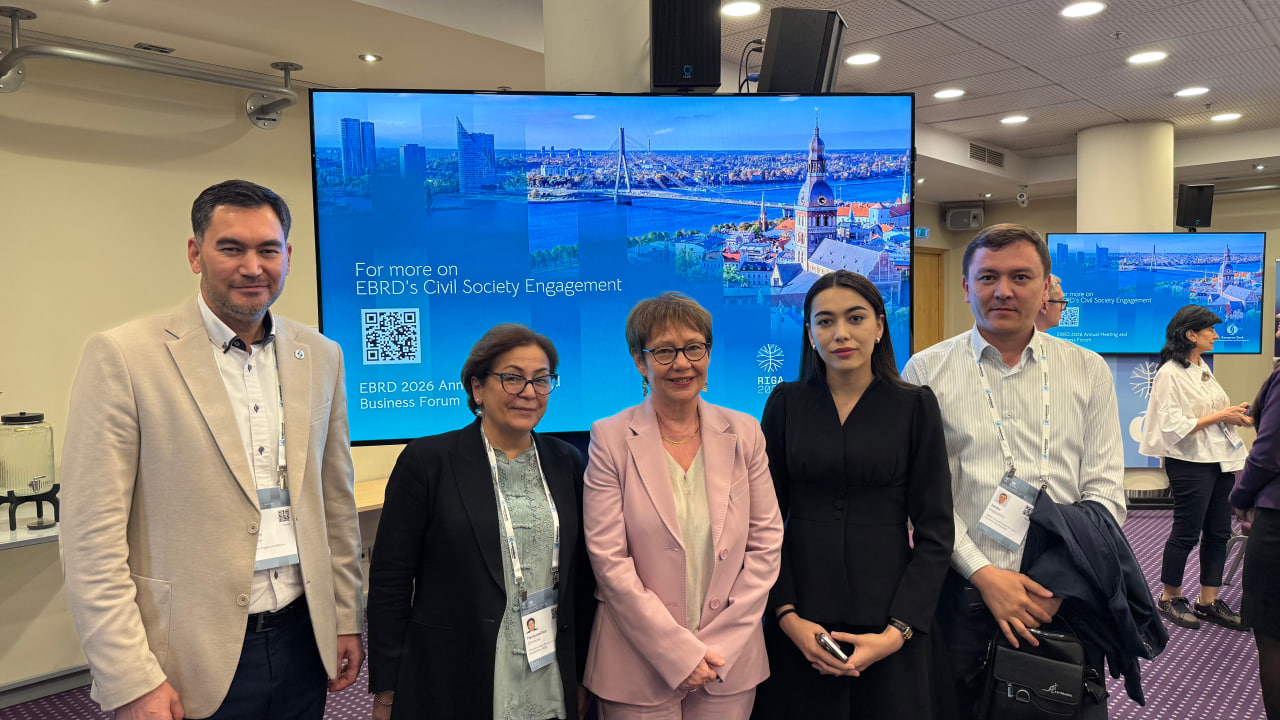
Civil Society as a Catalyst for Change and an Architect of Resilience: Outcomes of the Second Day of the EBRD Annual Meeting 2026
RIGA, LATVIA — 7 June 2026 — A summary of the key events of the second day of the EBRD Civil Society Programme, held within the framework of the 2026 Annual Meeting. Today served as a platform for in-depth strategic dialogue between the senior management of the European Bank for Reconstruction and Development (EBRD), government bodies, and the leaders of civil society organisations (CSOs).
Participants focused on overcoming global instability, the tools for the independent evaluation of inclusive reforms, and the large-scale expansion of the Bank’s geographic and institutional horizons. Notably, the fundamental themes of gender equality, diversity, and social inclusion ran as a common thread through every single one of today’s panel discussions, without exception.
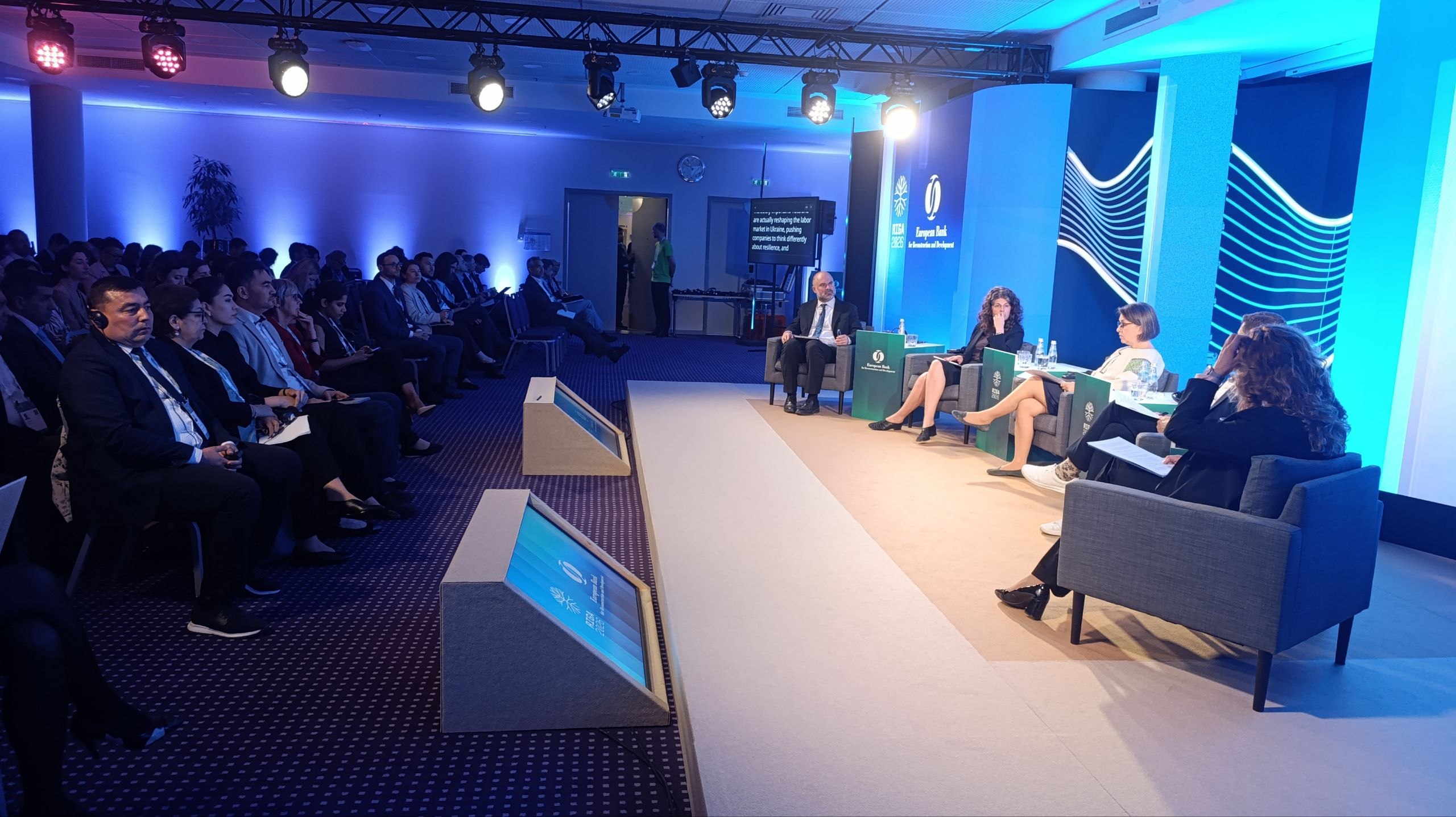
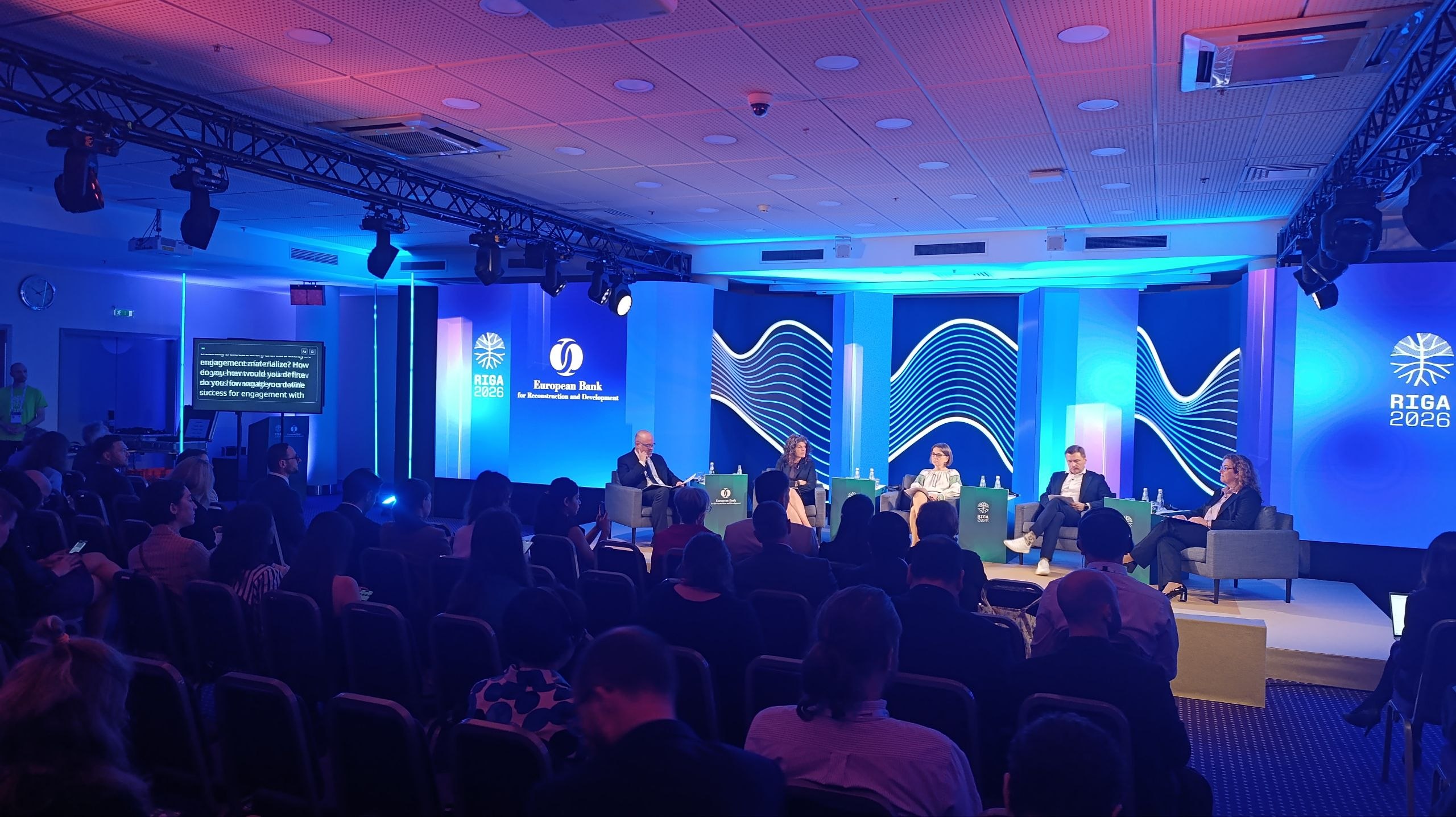
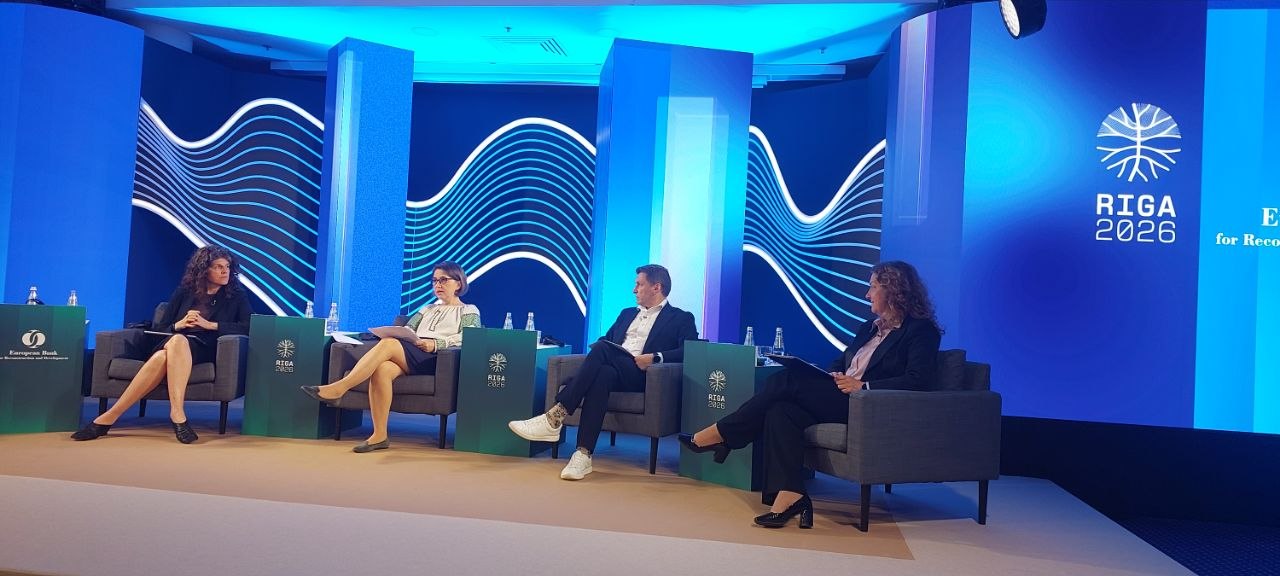
Panel Discussion I: “From Instability to Resilience — Civil Society as a Catalyst for Change”
Key message: a shift from crisis response towards systemic strategic partnership.
The first open CSO discussion was devoted to rethinking the role of the civic sector amid permanent uncertainty. Participants agreed that CSOs today are not merely humanitarian institutions, but key drivers of economic recovery, defenders of civil liberties, and authors of innovative approaches.
Speakers placed particular emphasis on the point that a sustainable economic recovery is impossible without ensuring gender equality and creating a level playing field for vulnerable groups of the population.
- Session moderator: Lorenzo Ciari, Director for Impact, EBRD.
- Key speakers: Nadia Petkova — Managing Director for Impact and Partnerships, EBRD; Oksana Filonenko — Head of the “Free People” Employment Centre, Ukraine; Viktor Liakh — Head of the “East Europe” Foundation; Līga Klāviņa — Deputy State Secretary for Financial Policy, Ministry of Finance of Latvia.
“In times of turbulence, civil society takes on the role of a strategic systemic partner, capable not only of protecting civic space but also of offering the state and international institutions flexible, innovative solutions for economic revival — solutions that must always place people and the principles of inclusivity at their core,” noted M. Shirinova, Director of the “SABR” Republican Centre for Socio-Economic Development, following the panel discussion.
Panel Discussion II: “Evaluation Expert Panel: How Evaluation Supports the Transition to Sustainable and Inclusive Economies”
Key message: transparency, independent audit, and a focus on the “green” transition.
The second session brought together representatives of the EBRD’s Independent Evaluation Department and CSO leaders for an open, forward-looking exchange of views. At the centre of the discussion were the results of the 2025 Annual Evaluation Review, the effectiveness of the Approach to the Transition to a Green Economy for 2021–2025, as well as the Bank’s activities in the Baltic region and energy security.
During the discussion, experts emphasised that any metrics for the success of the “green” transition and of EBRD investment projects are now directly linked to indicators of social inclusion and to how evenly the rights and opportunities of men and women are taken into account in the sectors of the economy undergoing transformation.
- Key speakers: Directors of teams at the EBRD Independent Evaluation Department, Gabriele Fattorelli and Samer Hachem; departmental experts Olga Mrinska and Karin Becker; as well as Pierre Heilbronn (former Special Envoy of the President of the French Republic).
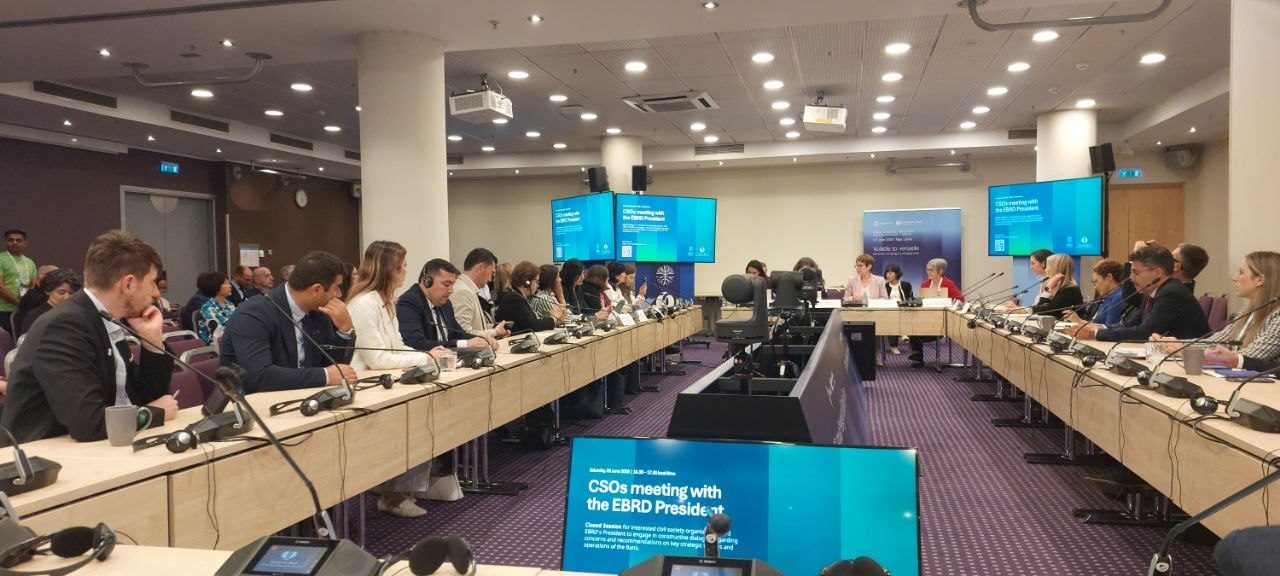
Panel Discussion III (Closed Session): “High-Level Dialogue: A Meeting of the EBRD President with CSO Representatives”
Key message: direct dialogue at the highest level, strengthening the institutional architecture, and entering new geopolitical markets.
The culmination of the day was a closed meeting between civic-sector leaders and EBRD management, devoted to the Bank’s strategic priorities and key policy directions.
Opening remarks by Elena Koval — Head of the Civil Society Engagement and Private Sector Partnerships Unit at the EBRD.
The meeting opened with Elena Koval outlining the EBRD’s four main priority directions for strategic engagement with civil society institutions, in which the principles of gender balance and inclusivity are embedded as a foundational basis for each direction:
- Inclusive engagement in decision-making: expanding the practice of holding preliminary consultations with CSOs when developing country strategies and major infrastructure projects.
- Strengthening transparency and accountability mechanisms: creating more accessible and effective platforms for independent public oversight of the implementation of investments.
- Supporting the resilience of CSOs on the ground: building the institutional capacity of local civil society organisations, especially in regions affected by economic or geopolitical instability.
- Partnership in the “green” and digital transition: engaging CSOs as co-authors and verifiers of the Bank’s environmental and social standards at the regional level.
Key points from the address of EBRD President Odile Renaud-Basso:
- A new era of engagement with CSOs: Odile Renaud-Basso endorsed the directions presented and stressed that the EBRD regards civil society as an integral part of its operating model, capable of enhancing the social return on every euro invested.
- A global step into Sub-Saharan Africa: The EBRD President set out a strategic vision for the Bank’s activities in the new territories of Sub-Saharan Africa. Renaud-Basso particularly noted that, upon entering the Sub-Saharan region, the Bank will draw on its accumulated experience of working with CSOs. It is precisely local civil society institutions that should become the guarantor of protecting the rights of vulnerable groups, advancing the economic independence of women, ensuring transparency in the deployment of “green” technologies, and achieving the successful, inclusive adaptation of projects to local realities.
- Officials at the meeting: Odile Renaud-Basso — President of the EBRD; Elena Koval — EBRD; Nadia Petkova — EBRD; and Emma McLennan — Chair of the CSO Board and President of the Eastern Alliance for Safe and Sustainable Transport.
The second day of the Meeting demonstrated that the EBRD and civil society are reaching a fundamentally new level of institutional trust, in which equality of rights and opportunities is the principal measure of progress. The four directions outlined by Elena Koval provide clear points of reference. The Bank’s focus on gender inclusion and the expansion of its geography into Sub-Saharan Africa opens up unique opportunities for the intercontinental exchange of best practices in supporting women’s leadership, developing social entrepreneurship, microfinance, and protecting the rights of vulnerable groups.
The “SABR” Republican Centre for Socio-Economic Development continues to actively promote the sustainable development agenda, supporting inclusive reforms and strengthening partnership ties to achieve long-term stability.
MEDIA CONTACTS:
Press Office, “SABR” Republican Centre for Socio-Economic Development
sabrcenter@gmail.com
www.sabr.uz