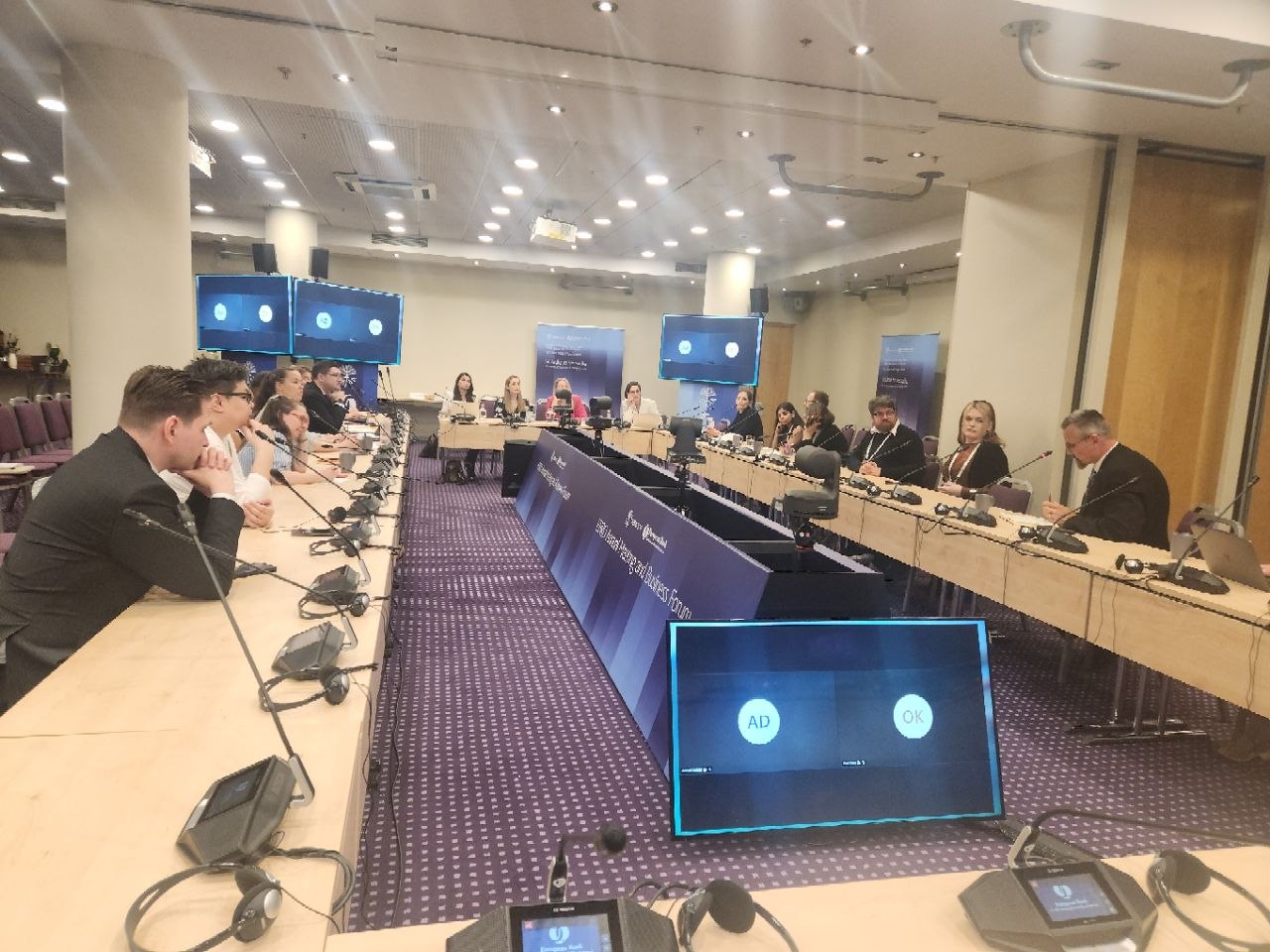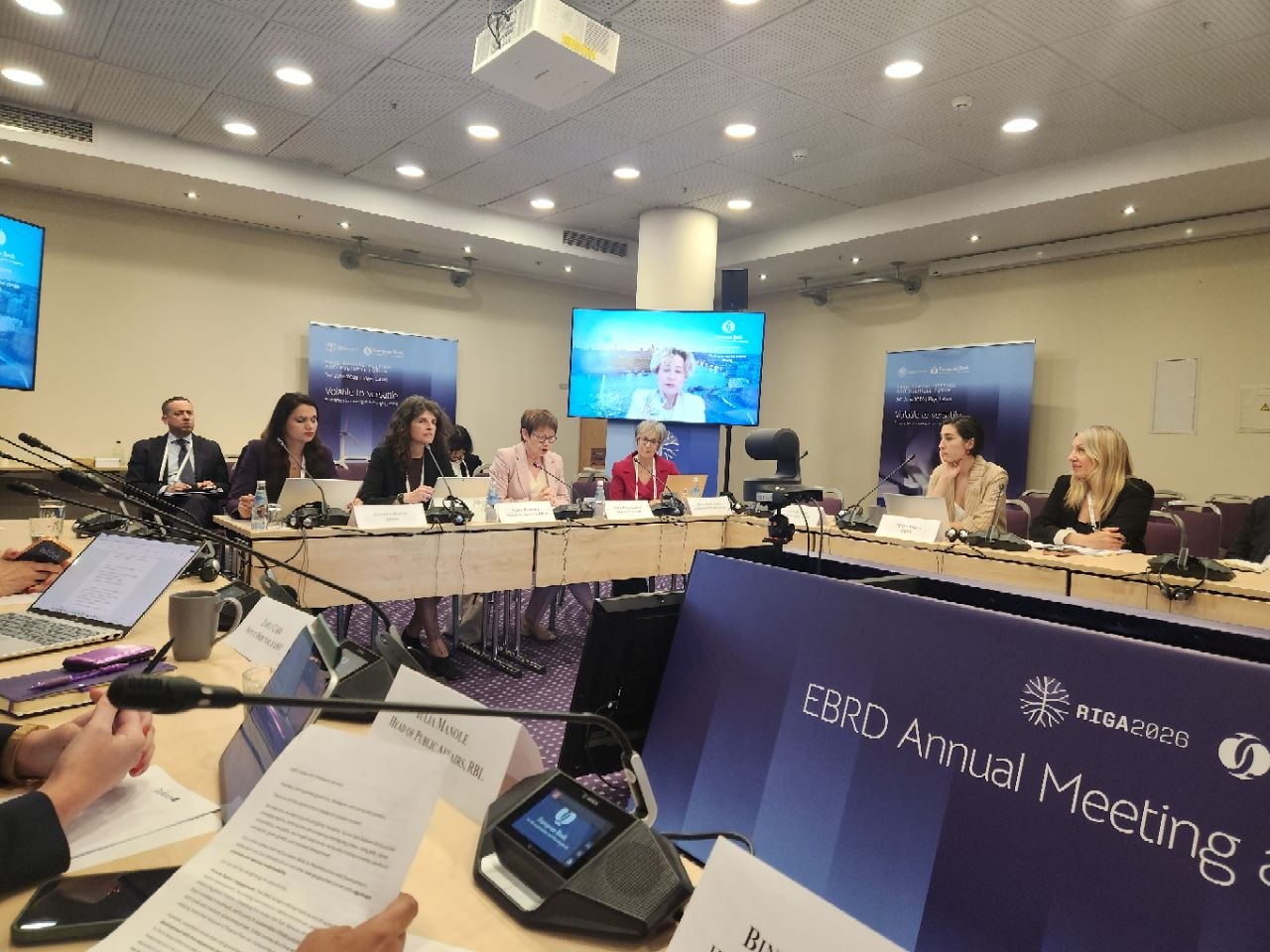
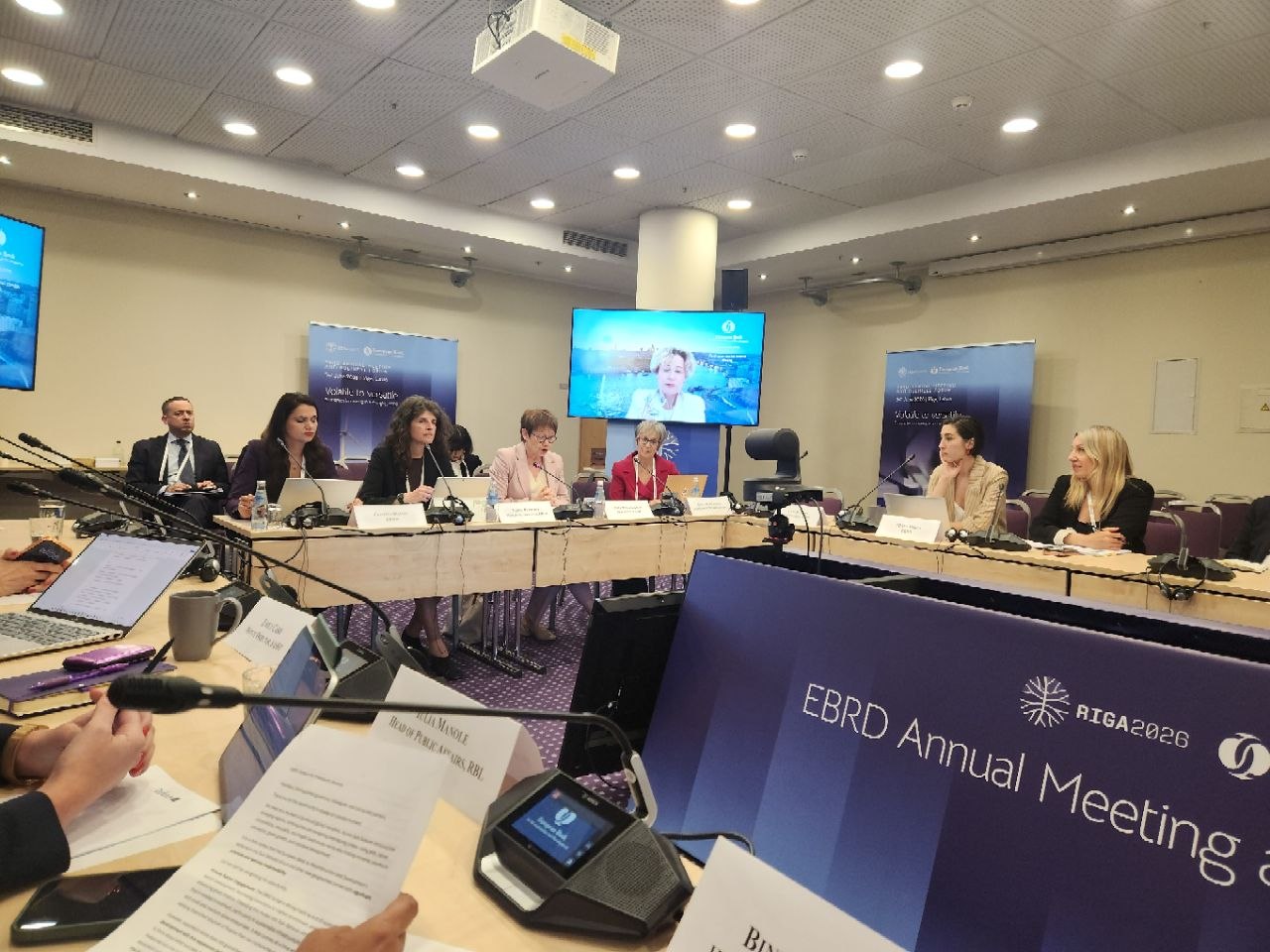
The Annual Meeting of the European Bank for Reconstruction and Development (EBRD) in Riga, held under the slogan “From Instability to Agility: National Innovation in a Changing World”, has concluded.
The third day of the event traditionally served as a venue for summing up results, holding the final Business Forum discussions, and formalising the Bank’s commitments to civil society.
Civil Society and NGOs
This year, engagement with civil society institutions (CSOs) and non-governmental non-commercial organisations (NGOs) took place amid intense debate.
- Number of participants and reach: The official consultation programme (including preliminary sessions to discuss the EBRD’s key strategies for 2026–2030) involved more than 1,000 civil society organisations from the Bank’s various regions of operation. Hundreds of NGO representatives registered for the in-person and hybrid sessions held during the Meeting itself.
- Outcomes of the third day for CSOs: The main outcome of the civic sector’s final meetings with EBRD management and its President, Odile Renaud-Basso, was a discussion on the protection of civic space and human rights in regions of investment. Representatives of networks such as CEE Bankwatch Network actively advocated for the protection of minorities, greater transparency in public procurement, and safe access to project accountability mechanisms (the Project Accountability Policy). NGOs called on the Bank to abandon a blind adherence to “market reforms” in favour of strong social and environmental safeguards for local populations.
Brief Outcomes of the Meeting
More than 2,000 delegates gathered in Riga, including heads of state (the meeting was opened by the President of Latvia, Edgars Rinkēvičs), finance ministers, investors, and experts.
- Focus on adaptation and technology: the key themes of the panel discussions were the impact of artificial intelligence on emerging markets, the development of green energy, the mobilisation of private capital, and space technologies.
- Special guest: The Meeting was attended by Queen Máxima of the Netherlands (the UN Secretary-General’s Special Advocate for Inclusive Finance for Development). She emphasised the creation of inclusive financial systems resilient to global shocks.
- Support for Ukraine: the Bank’s Governors officially reaffirmed Ukraine’s unprecedented support status. It was stressed that the EBRD has already channelled around €10 billion into the real sector of the Ukrainian economy since 2022 and is ready to scale up investment at the stage of full-scale post-war reconstruction.
The Bank’s Strategy for the Year (and the 2026–2030 period)
At this Meeting, the EBRD laid the foundation for its operations under the new Strategic and Capital Framework 2026–2030.
The main pillars of the EBRD’s strategy:
|
Strategic direction |
Essence and key focus |
|---|---|
|
Economic Governance |
Introduction of an entirely new Economic Governance Strategy. The EBRD is now launching mandatory screening of all clients for reform potential and introducing Governance Action Plans and sector-level Reform Roadmaps. |
|
The “green” transition and agility |
A focus on investment in renewable energy sources and the decarbonisation of the private sector. Particular attention is paid to preventing the emergence of “isolated communities” when coal enterprises are closed (the Just Transition principle). |
|
Human capital and inclusion |
Finalisation of the Gender Equality and Human Capital Strategy for 2026–2030. Support for inclusive financing for small and medium-sized enterprises (SMEs). |
|
Geographic expansion |
The full launch of operations and investment in new regions of operation — the countries of Sub-Saharan Africa (Benin, Côte d’Ivoire, Nigeria) and Iraq. |
Key takeaway from the event: the EBRD is decisively shifting its emphasis from short-term crisis response to systemic, long-term governance reforms, requiring both states and private business to meet strict criteria of transparency and environmental sustainability.